
Breaking Down the ABS System: A Quick Fleet Manager's Guide
Trailer ABS isn’t just a box checked for compliance — it’s a critical safety system that can make the difference between a routine stop and a catastrophic loss of control.
Still, many fleets overlook ABS diagnostics or treat them like an afterthought. For the fleet manager looking to improve uptime, reduce violations, and maintain control over inspections, this trailer ABS system guide offers the essentials — fast.
What Is the Trailer ABS System?
The trailer Anti-lock Braking System (ABS) prevents wheel lockup during hard braking, especially on slick roads. It improves vehicle stability and reduces stopping distance. Legally required on most commercial trailers built since 1998, the system includes:
Wheel speed sensors at each axle
An ABS ECU (Electronic Control Unit)
A modulator valve to adjust brake pressure
ABS warning lamp — required and visible from the tractor
Why Trailer ABS Inspections Matter
DOT inspectors check ABS systems regularly — especially during brake blitz weeks and roadside inspections. Failing to meet standards can lead to:
Out-of-service orders
CSA score hits
Fines or warnings
Increased liability after a crash
But here’s the catch: many ABS issues don’t show up until the system is activated — which can’t always be confirmed during a walk-around or visual check.
What Needs to Be Tested?
A proper trailer ABS inspection covers:
Power supply to the ABS ECU
Sensor signal continuity
Diagnostic Trouble Codes (DTCs) — active and stored
Functionality of the ABS lamp
Trailer connection wiring integrity
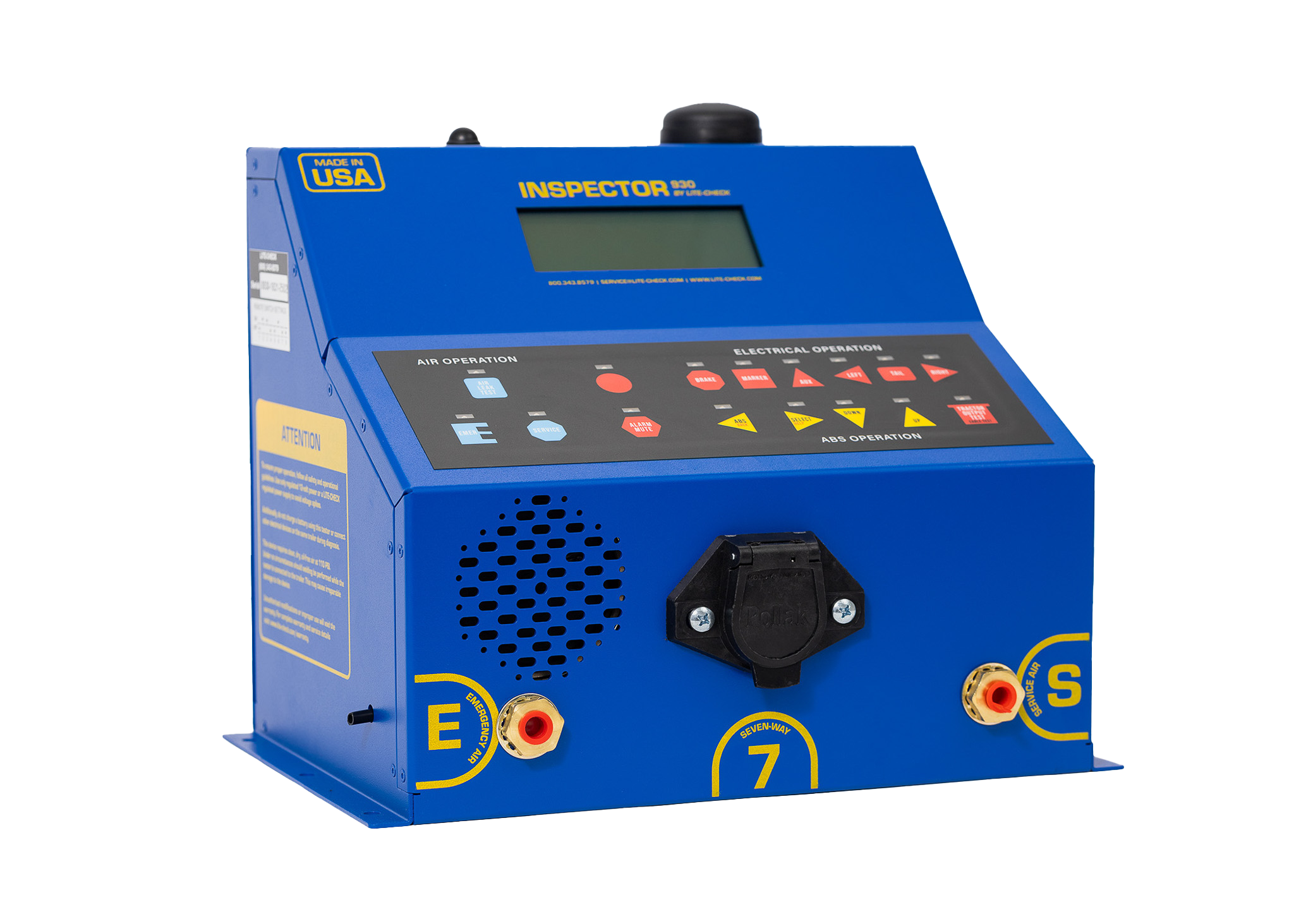
Visual checks won’t tell you any of this. That’s why fleets use the Inspector 930 — a tool that powers the trailer system independently and reads ABS fault codes on the spot.
How the Inspector 930 Simplifies ABS Diagnostics
The Inspector 930 eliminates the need for a tractor or secondary equipment to test trailer ABS systems. In one-person operation, it provides:
Live ABS fault codes from the trailer
Lighting + air system diagnostics in the same session
Pass/fail indicators
7-way plug and gladhand connection — no custom wiring
It allows a tech to validate all major safety systems in one run, with consistent results every time.
Bottom Line: Fast, Reliable ABS Checks
Whether you're dealing with a tight shop schedule or prepping trailers before they hit the road, having a reliable tool to perform trailer ABS system checks keeps your fleet compliant and moving. The Inspector 930 gives you the ability to catch ABS issues before enforcement does — and that means fewer surprises, fewer violations, and better safety outcomes.
To put ABS diagnostics back in your shop’s control, visit lite-check.com/shop/inspector-930 or call 509-535-7512.